
Why does the insulation effect of thermal insulation materials decrease drastically after they get damp? In building energy conservation practices, thermal insulation materials have long been standard equipment for exterior walls, roofs, cold storage facilities, and pipelines. Whether it’s a passive house in the frigid north or an air-conditioned building in the humid south, people hope to reduce heat transfer through a layer of “insulating blanket.” However, a phenomenon that is often overlooked but has serious consequences is that once thermal insulation materials get damp, their insulation capacity often drops sharply, even worse than having no insulation at all. Why does a material that seems “just a little damp” cause the thermal performance of the entire building envelope to collapse?
I. The essence of insulation: relying on “trapping” air, not on the materials themselves.
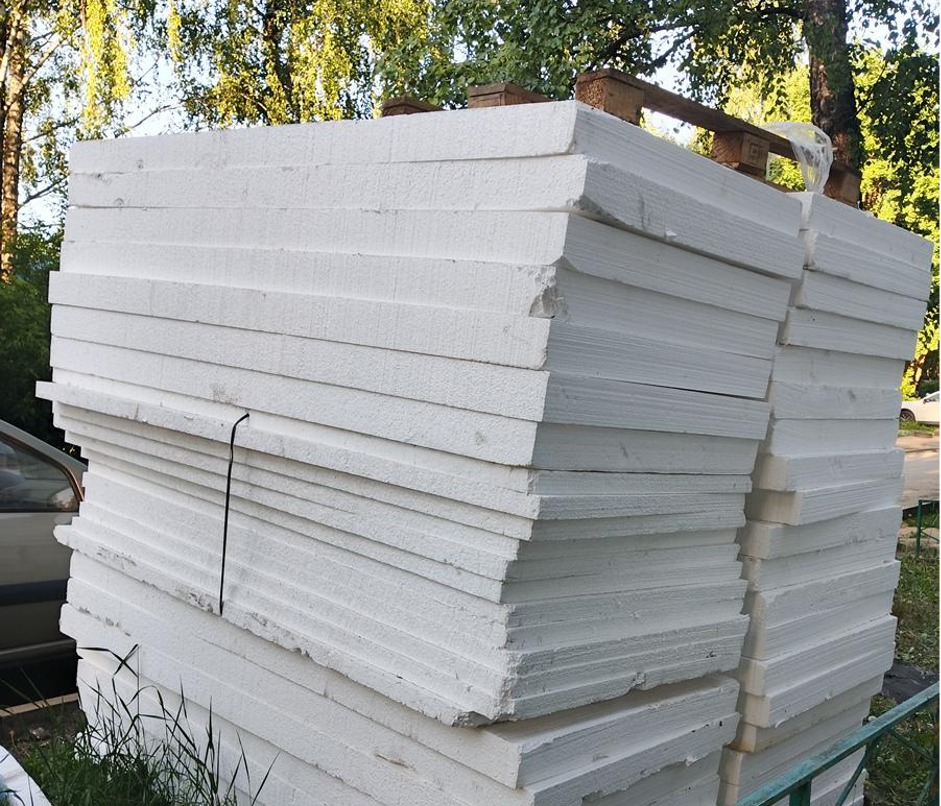
Most building insulation materials (rock wool, glass wool, EPS polystyrene board, XPS extruded polystyrene board, rigid polyurethane foam, phenolic foam, expanded perlite, etc.) are porous or fibrous structures . Their thermal conductivity is much lower than that of concrete, brick, and steel primarily due to the large amount of still air inside .
At room temperature, the thermal conductivity of dry air is approximately 0.026 W/( m·K ), while the thermal conductivity of solids (such as polystyrene molecular chains and mineral fibers) is typically between 0.2 and 2.0 W/( m·K ), a difference of nearly 10 to 80 times. Therefore, what truly provides insulation is the air trapped within the pores, rather than the solid framework of the material itself.
For thermal insulation materials to achieve a low thermal conductivity, three conditions must be met simultaneously:
1. High porosity (large air content);
2. Keep pores as closed or as small as possible (to reduce air convection);
3. There is no water in the pores (water would undermine the advantage of air’s low thermal conductivity).
Once water molecules get in, the situation changes completely.
Second, once moisture enters, all three heat transfer pathways are simultaneously “enhanced”.
When insulation materials become damp, heat transfer is significantly enhanced through the following three mechanisms:
1. Water’s direct solid-state heat conduction replaces air’s heat conduction.
The thermal conductivity of water is approximately 0.60 W/( m·K ) (at 20 °C ), which is about 23 times that of still air. When a portion of the pores is filled with water, the thermal conductivity of that area increases by more than 20 times instantly.
2. Convective and Diffusion Heat Transfer of Liquid Water and Water Vapor
When a temperature difference exists, a vapor pressure gradient forms inside the material from the hot end to the cold end. Water vapor continuously migrates from the hot end to the cold end, condensing into liquid water and releasing latent heat at the cold end; the liquid water may then flow back through capillary action or gravity. This cycle of evaporation-migration-condensation-reflux forms an additional latent heat transfer channel , equivalent to adding a “heat pipe effect” inside the material.
3. The thermal conductivity increases dramatically after freezing at low temperatures.
In northern winters, when the internal temperature of a material drops below 0 °C , absorbed moisture will freeze. Ice has a thermal conductivity of approximately 2.2 W/( m·K ), which is more than 80 times that of still air and 3.7 times that of liquid water. Freezing not only significantly increases solid-phase thermal conductivity but also enlarges pores, damages fiber structures, and can even lead to the overall pulverization or detachment of the material.
Experimental data shows that for most porous insulation materials , the thermal conductivity increases by about 5%–15% (depending on the material) for every 1% increase in moisture content; when the moisture content reaches 10%–20%, the thermal conductivity often doubles or even more; if a freeze-thaw cycle occurs, the performance degradation will accelerate exponentially.
Third, different insulation materials have vastly different sensitivities to moisture.
Not all insulation materials react the same way when exposed to moisture. Based on their water-repellent properties, traditional insulation can be broadly categorized into three types:
A. Materials with extremely high closed-cell ratio and strong hydrophobicity (relatively less affected by moisture)
• Extruded polystyrene board (XPS): Closed cell rate ≥99%, water absorption rate is usually <1%.
• Rigid polyurethane foam (sprayed/board): High closed-cell rate, water absorption rate is generally <2%–4%.
• Phenolic foam (some premium products): Closed-cell structure + hydrophobic surface treatment.
• Aerogel composite insulation board uses a special process to combine aerogel with other materials, achieving a closed-cell rate of over 90% to improve compressive strength and impermeability , with a water absorption rate typically < 0.5%.
Even if these materials are exposed to moisture for a short period, the increase in thermal conductivity is relatively limited. However, if they are in a high-humidity environment for a long time or if there are open cracks, moisture will still slowly seep in, and their performance will degrade significantly after a few years.
B. Materials with open or semi-open pores and strong hydrophilicity (their performance deteriorates the fastest after being exposed to moisture).
• Rock wool, slag wool, glass wool: fibrous, open-cell structure, water absorption rate can reach 100%–500% (by mass).
• Expanded perlite and expanded vermiculite: porous water-absorbing sponges.
Once these materials become damp, their thermal conductivity can increase rapidly by 2–5 times or more. In many northern regions, exterior wall systems using rock wool exhibit a noticeable “not warm in winter, not cool in summer” phenomenon within 2–3 years after the waterproofing layer is damaged or steam penetrates.
C. Intermediate material (EPS molded polystyrene board)
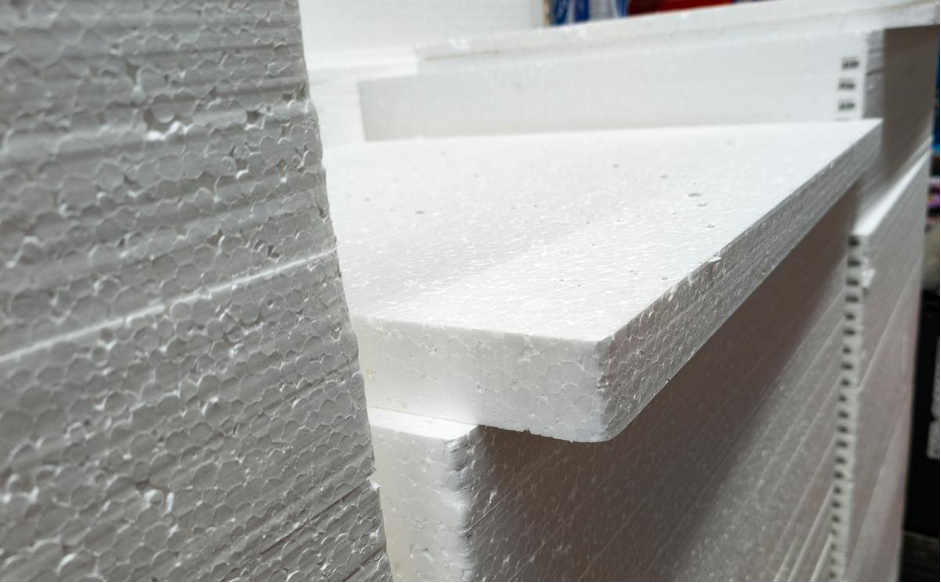
EPS typically has a water absorption rate of 2%–6% (by volume). However, due to its open structure, moisture can remain trapped for a long time after entering, resulting in a significant increase in thermal conductivity and making it difficult to dry naturally.
Special note needs to be made regarding aerogel materials. Aerogels are open-cell materials but are extremely hydrophobic, mainly due to their unique nanoscale pore size. Air molecules are almost stationary within the pores, thus eliminating convective heat transfer and achieving insulation effects similar to or even better than traditional closed-cell materials (such as XPS or polyurethane).
IV. Typical Manifestations and Consequences of Insulation Failure Due to Moisture in Engineering Projects
1. The U-value (heat transfer coefficient) increases significantly.
The exterior wall, originally designed with a U-value of 0.25 W/(m²·K), may rise to 0.6–1.0 or even higher after becoming damp, which is equivalent to losing most of the insulation layer.
2. Condensation, mold, and indoor dampness
When the internal surface temperature drops below the dew point, condensation repeatedly forms inside or on the surface of the wall, leading to mold growth, deterioration of indoor air quality, and dampness in furniture and clothing.
3. Freeze-thaw damage and structural safety hazards
The situation is particularly severe in northern regions. Repeated freeze-thaw cycles after water absorption lead to material powdering and flaking, cracking of the protective layer, and accelerated corrosion of the reinforcing steel.
4. Increased cold bridging and localized extreme low temperatures
The thermal conductivity of damp areas increases, forming new “super cold bridges,” and the inner surface temperature at windows, external corners, and beam-slab joints may drop below 5 °C .
5. Air conditioning/heating energy consumption has skyrocketed.
Actual measurement data shows that some existing buildings that are severely damp consume 40%–100% more energy for heating in winter than the design value.
V. How to prevent moisture damage throughout the entire lifecycle of design, construction, and maintenance?
1. Source material selection
Prioritize materials with high closed-cell ratio and good water repellency; in humid areas, avoid using highly absorbent fiber materials for exposed or easily permeable parts.
2. System waterproofing and steam control
External wall insulation: A proper waterproof and breathable membrane (or a combination of waterproof layer and breathable layer) must be installed.
• Roof insulation: Double protection of rigid waterproofing + flexible waterproofing is required.
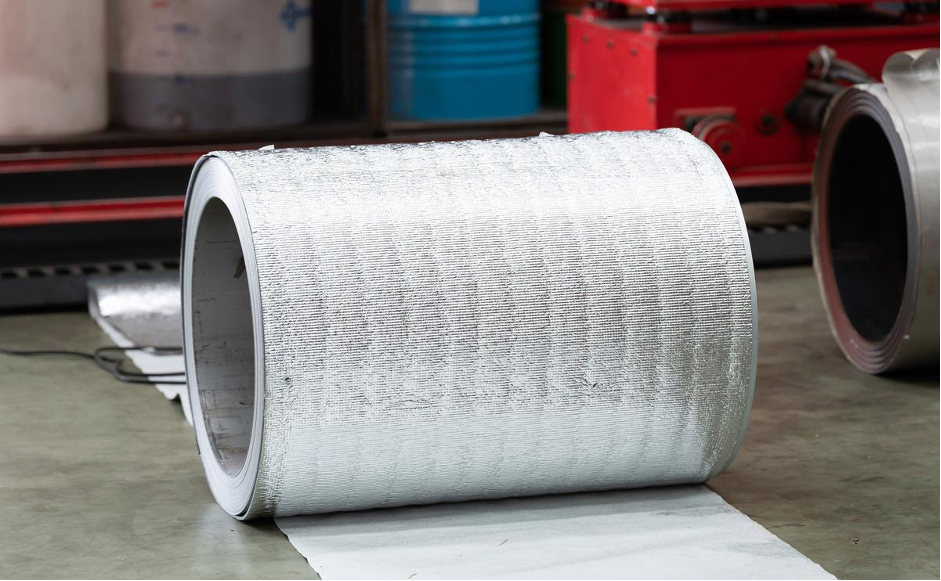
• Internal insulation/sandwich panels: A high-barrier vapor barrier (such as aluminum foil or polyethylene film) should be installed on the warm side.
3. Detailed processing of nodes
Vulnerable areas such as door and window openings, pipe penetrations, and expansion joints must be thoroughly sealed using sealant, waterproof sleeves, and additional insulation.
4. Moisture prevention during construction.
Materials must be covered with rainproof coverings upon arrival at the site; outdoor storage time should be minimized; construction is prohibited on rainy days; and damp boards must not be used on walls.
5. Regular inspections during use
Pay special attention to areas such as the parapet wall of the roof, eaves gutters, water seepage marks on the exterior walls, and dripping water under the air conditioning unit. Repair the waterproof layer promptly if any problems are found.
Under the current building energy efficiency standards, the thermal conductivity values used in the design phase are based on measurements taken under dry conditions . Once the material becomes damp, this value becomes merely “paper data,” and the actual energy-saving effect is significantly reduced. It can be said that the moisture resistance of insulation materials is often more important than their dry thermal conductivity .
For developers, design institutes, construction companies, and even homeowners, an insulation system is not simply adding a layer of “cotton blanket,” but a delicate “breathing system” that requires a balance of multiple aspects, including waterproofing, vapor barrier, drainage, and breathability. Failure in any one of these aspects can render the entire system unusable prematurely.
Only by prioritizing moisture prevention in everything from material selection and detailed construction to long-term maintenance can we truly enjoy the winter warmth and summer coolness, as well as the energy-saving benefits that insulation materials should provide. Otherwise, no matter how much money you spend on materials with the lowest thermal conductivity, once they get damp, they are nothing more than expensive “wet sponges.”